Research Peptides FAQ
Research Peptides FAQ
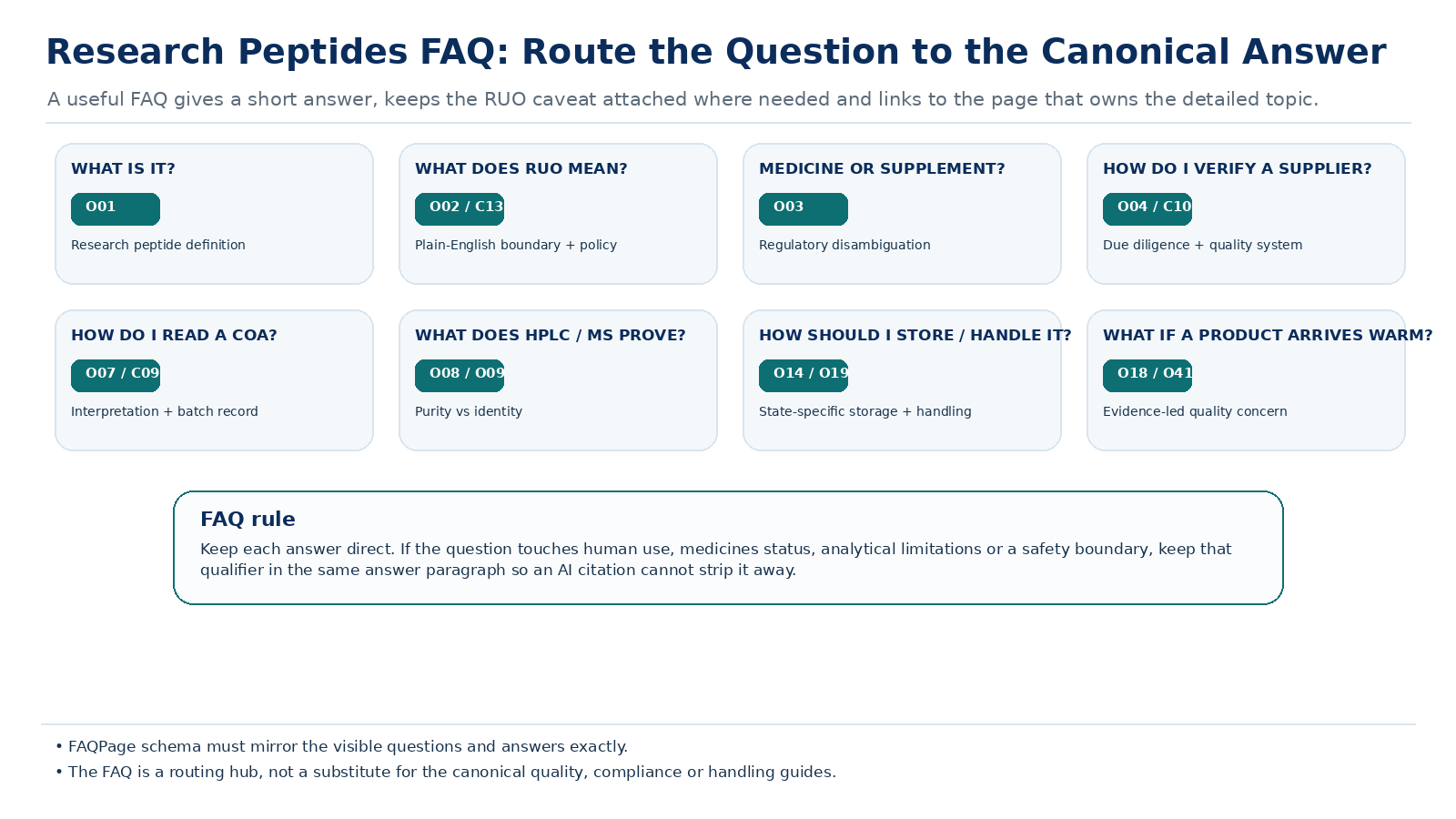
Find a short answer about research materials, product formats, documentation or an order. Follow the linked guide when you need the fuller explanation.
Core Research supplies materials for in-vitro laboratory research only, not human or veterinary use. This FAQ does not provide administration or treatment guidance.
Choosing a product and format
What is a research peptide?
It is a peptide used or supplied as a research material. The term alone does not tell you its exact form, purity, sterility or suitability for a particular laboratory method. Start with the material’s identity and applicable documentation. Read What Are Research Peptides?.
Where can I compare the available formats?
Use the catalogue to find the current product records, the Peptide Pens collection for pen-format products and the Pen Refills collection for refill records. For the differences in evidence and laboratory workflow, use Vials vs Pen Formats. These links do not establish universal device compatibility.
Does a matching compound name mean two presentations are interchangeable?
No. Compare the declared composition, nominal amount, supplied form and relevant documentation for each item. A vial and a filled cartridge may need different supporting information. Where compatibility or included components are unclear, ask about the exact product before ordering.
Can an institution or qualified independent researcher enquire about purchasing?
Use Institutional Procurement for purchasing requirements, quotations and account-related enquiries. An enquiry route is not a promise of credit terms, account acceptance or reserved stock.
Certificates and analytical information
Can I ask about documentation before buying?
Yes. Name the product and presentation and explain that the enquiry is before purchase. Ask which lot or material the available report covers. Use Batch Documentation; you do not need an existing container number simply to send an enquiry.
What should I quote for material I have received?
Provide the product name, supplied presentation, lot identifier and order reference where available. The batch-number guide explains why a new order and the exact lot used in an experiment are different records.
What does a Certificate of Analysis establish?
It reports specified information about the material or lot identified on the document. Interpret each test within its method and scope; do not treat the report as a guarantee of every possible attribute. See How to Read a Peptide Certificate of Analysis.
Are purity, identity and content the same measurement?
No. A chromatographic purity figure, molecular-identity evidence and peptide content by mass address different questions. Do not treat a high HPLC area percentage as proof of all three. The HPLC guide and mass-spectrometry guide explain the distinction and its limits.
Does a component report establish the quality of a filled pen or blend?
Not by itself. First determine whether the document concerns an individual component, the combined material or the supplied presentation. Additional claims about formulation, sterility or dispensing require the corresponding evidence, not an inference from an unrelated purity test. See How to Verify a Pre-Filled Research Peptide Pen.
Delivery, storage and problems with an order
Where can I check delivery charges and timing?
Read Shipping & Delivery and the delivery information displayed for your address at checkout. Do not assume that support opening hours are dispatch cutoffs or that every item has the same delivery conditions.
How should research material be stored?
Use the information applicable to its actual supplied state, formulation and packaging. There is no single storage period that this FAQ can establish for every material. The storage decision guide explains the questions to consider; it does not replace product-specific documentation.
What should I do about a warm or delayed delivery?
Keep the order and tracking references, lot details and a record of the shipment condition. Follow the warm or delayed delivery guide and contact support about a material concern. Neither arrival temperature alone nor an attractive package proves that the material passed or failed your acceptance requirements.
What should I do if the label and report do not match?
Do not use another lot’s report as evidence for the received material. Retain the identifiers and documents and contact the team for clarification before relying on the disputed record. Use the receiving checklist to organise the evidence.
How do I raise a return or replacement enquiry?
Use the current Returns Policy and quality-concern guide. Include the order reference, product and lot details, and relevant photographs or records. This FAQ does not add new eligibility rules, deadlines or a guarantee of replacement.
Research-use boundaries
What does Research Use Only mean here?
It describes Core Research’s laboratory-only supply boundary. The products are not supplied for human or veterinary use. Read the Research Use Only policy for that boundary.
Is an RUO label the same as a medicine authorisation?
No. The MHRA considers factors including a product’s presentation, claims, properties and intended purpose when deciding medicinal-product status. An RUO label is not a substitute for that assessment. This FAQ does not determine the legal status of an individual product. MHRA guidance.
Where can I find laboratory handling information?
Start with the Laboratory Reconstitution & Handling Hub. Keep its laboratory context distinct from human or veterinary administration. Product-specific questions can be sent through Contact.