Description
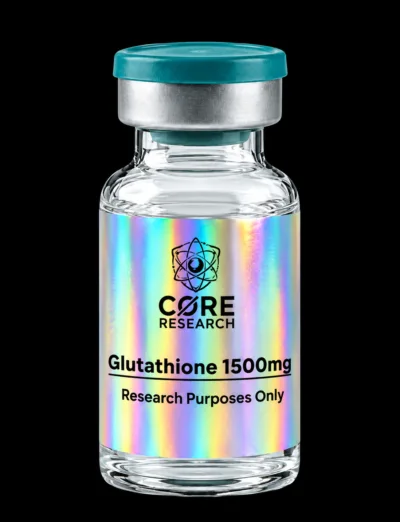
Glutathione 1500mg — Product Identity and Format
GSH is a tripeptide with the sequence γ-Glu-Cys-Gly (L-γ-glutamyl-L-cysteinyl-glycine), characterised by the unusual γ-peptide bond between glutamate and cysteine that renders it resistant to most cellular peptidases. GSH is synthesised de novo in virtually all mammalian cells through a two-step enzymatic process: first, γ-glutamylcysteine synthetase (GCS/GCLC) catalyses the ATP-dependent condensation of glutamate and cysteine to form γ-glutamylcysteine; then, glutathione synthetase (GSS) adds glycine to form GSH. Intracellular GSH concentrations typically range from 1–10 mM, making it the most abundant non-protein thiol in mammalian cells. Each 1500mg vial supplied by Core Research contains reduced L-glutathione, verified by HPLC to a minimum purity of ≥99.0%.
GSH serves multiple essential functions in cellular biology. GSH also participates in the glutathione S-transferase (GST)-catalysed conjugation of electrophilic compounds and xenobiotics, facilitating their detoxification and export. In addition to its antioxidant functions, GSH regulates protein function through S-glutathionylation — the reversible formation of mixed disulphides between GSH and protein cysteine residues — a post-translational modification that protects proteins from irreversible oxidation and modulates their activity.
Compound Identity Matrix
| Attribute | Value | Specification |
|---|---|---|
| Common Name | Glutathione (GSH); Reduced L-Glutathione | γ-Glu-Cys-Gly tripeptide; primary intracellular antioxidant |
| Sequence | γ-L-Glu-L-Cys-Gly | Unusual γ-peptide bond between Glu and Cys; protease-resistant |
| CAS Number | 70-18-8 | Reduced L-glutathione (GSH) |
| Molecular Formula | C10H17N3O6S | Reduced form (free thiol) |
| Molecular Weight | 307.32 Da | Reduced form (monoisotopic) |
| Physical Form | White crystalline powder | Free acid; hygroscopic; characteristic sulfurous odour |
| Quantity per Vial | 1500 mg | Research-grade preparation |
| Purity (HPLC) | ≥99.0% | HPLC with electrochemical or UV detection |
| Redox State | Reduced (GSH) | Free thiol confirmed; <2% GSSG content |
Analytical Specification & Release Testing
Every batch of Glutathione 1500mg supplied by Core Research is subjected to a comprehensive analytical release protocol. Purity is determined by HPLC confirming ≥99.0% purity. Redox state is confirmed by Ellman’s reagent (DTNB) assay to verify the presence of the free thiol and confirm <2% GSSG content. Molecular identity is confirmed by ESI-MS. Endotoxin content is confirmed at <1.0 EU/mg by LAL kinetic turbidimetric assay.
| Test Parameter | Method | Specification | Typical Result |
|---|---|---|---|
| Purity (HPLC) | HPLC (electrochemical/UV) | ≥99.0% | ≥99.5% |
| Redox state (Ellman’s) | DTNB thiol assay | <2% GSSG | <1% GSSG |
| Identity (ESI-MS) | Electrospray ionisation MS | ±0.1 Da of theoretical MW | Conforms |
| Endotoxin (LAL) | Kinetic turbidimetric LAL | <1.0 EU/mg | <0.5 EU/mg |
| Appearance | Visual inspection | White crystalline powder | Conforms |
Storage, Stability & Handling
| Condition | Specification | Notes |
|---|---|---|
| Long-term storage (dry powder) | −20°C | Stable for ≥24 months from manufacture date; desiccated |
| Short-term storage (dry powder) | 2–8°C | Acceptable for up to 3 months; desiccated, inert atmosphere |
| Dissolved solution | Use immediately or freeze at −80°C | GSH oxidises rapidly in solution; prepare fresh for each experiment |
| pH sensitivity | Stable at pH 3–5; unstable at neutral/alkaline pH | Dissolve in slightly acidic buffer (0.1% TFA or 10 mM HCl) for stability |
| Oxidation prevention | Inert atmosphere (N₂ or Ar) recommended | Free thiol is susceptible to air oxidation; minimise exposure to oxygen |
Frequently Asked Questions
What is the molecular weight of glutathione?
The molecular weight of reduced L-glutathione (GSH) is 307.32 Da. The molecular formula is C10H17N3O6S and the CAS number is 70-18-8. GSH is a tripeptide with the unusual γ-peptide bond sequence γ-L-Glu-L-Cys-Gly.
How should glutathione solutions be prepared to prevent oxidation?
GSH is susceptible to oxidation in aqueous solution, particularly at neutral or alkaline pH and in the presence of oxygen. For research applications, Core Research recommends dissolving GSH in slightly acidic buffer (e.g., 0.1% TFA, 10 mM HCl, or phosphate buffer pH 5.0) under an inert atmosphere (nitrogen or argon). Solutions should be prepared fresh immediately before use, or aliquoted and stored at −80°C under inert atmosphere. The GSH/GSSG ratio of prepared solutions can be confirmed by Ellman’s reagent (DTNB) assay.
What is the difference between the 1500mg and the 1500mg Refill formats?
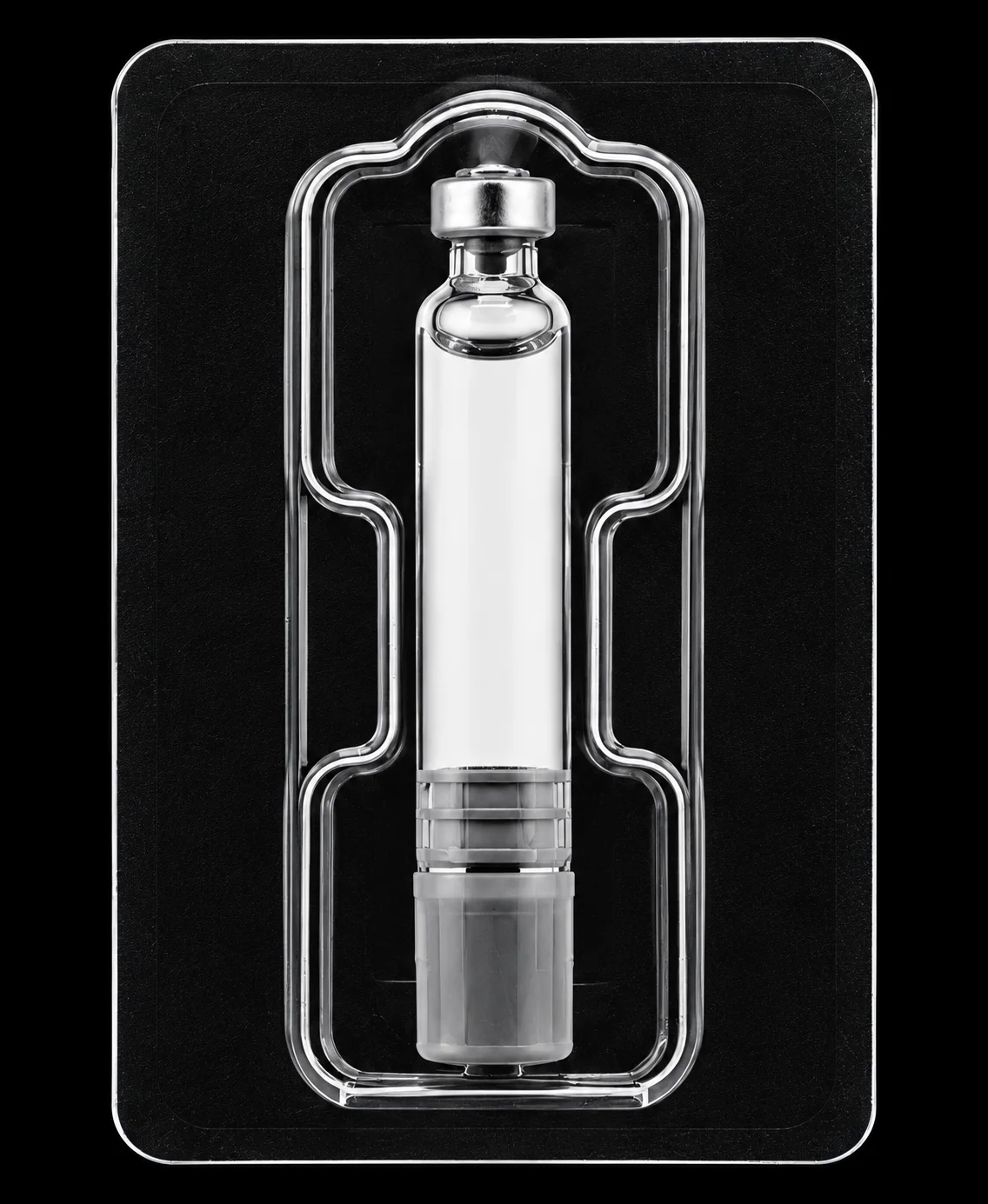
The Glutathione 1500mg and Glutathione 1500mg Refill contain the same active compound at the same purity specification. The Refill format is designed for researchers who use the Core Research peptide pen system and require a convenient refill supply. Both formats are supplied with batch-specific CoA documentation.
Is a Certificate of Analysis available?
Yes. Batch-specific CoA documents — including HPLC chromatograms, MS data, and Ellman’s assay results — are available through the Core Research CoA Portal and are included with each order.
Related Research Guides
Related Compound
NAD+ 1000mg — Redox Coenzyme Research
Related Compound
GHK-Cu 50mg — Antioxidant Copper Tripeptide
Quality
Certificate of Analysis Portal
Category
Antioxidants Research Catalogue
Research context
The published literature on this material is summarised in the laboratory guides linked below. This record describes the material as supplied: identity, format, analytics, storage and documentation. It does not describe effects, and none should be inferred from the catalogue category.
For Research Use Only
Glutathione is supplied exclusively for in vitro laboratory and pre-clinical research. Not for human or veterinary use. No dosing, reconstitution, or administration guidance is provided. Purchase confirms the buyer is a qualified researcher.