Description
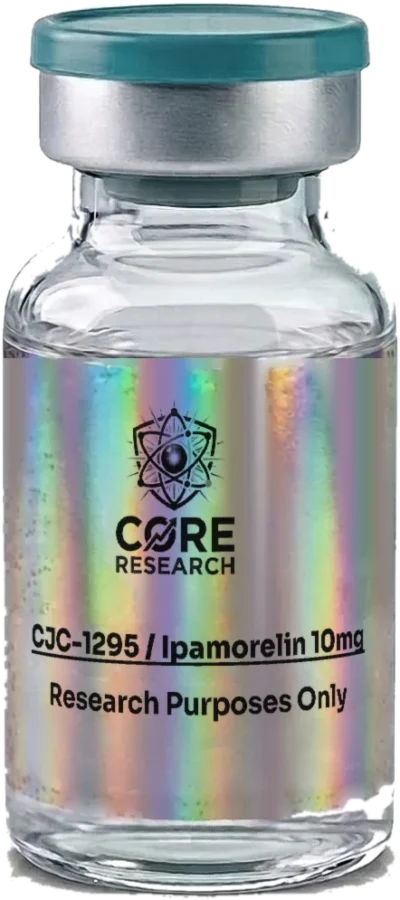
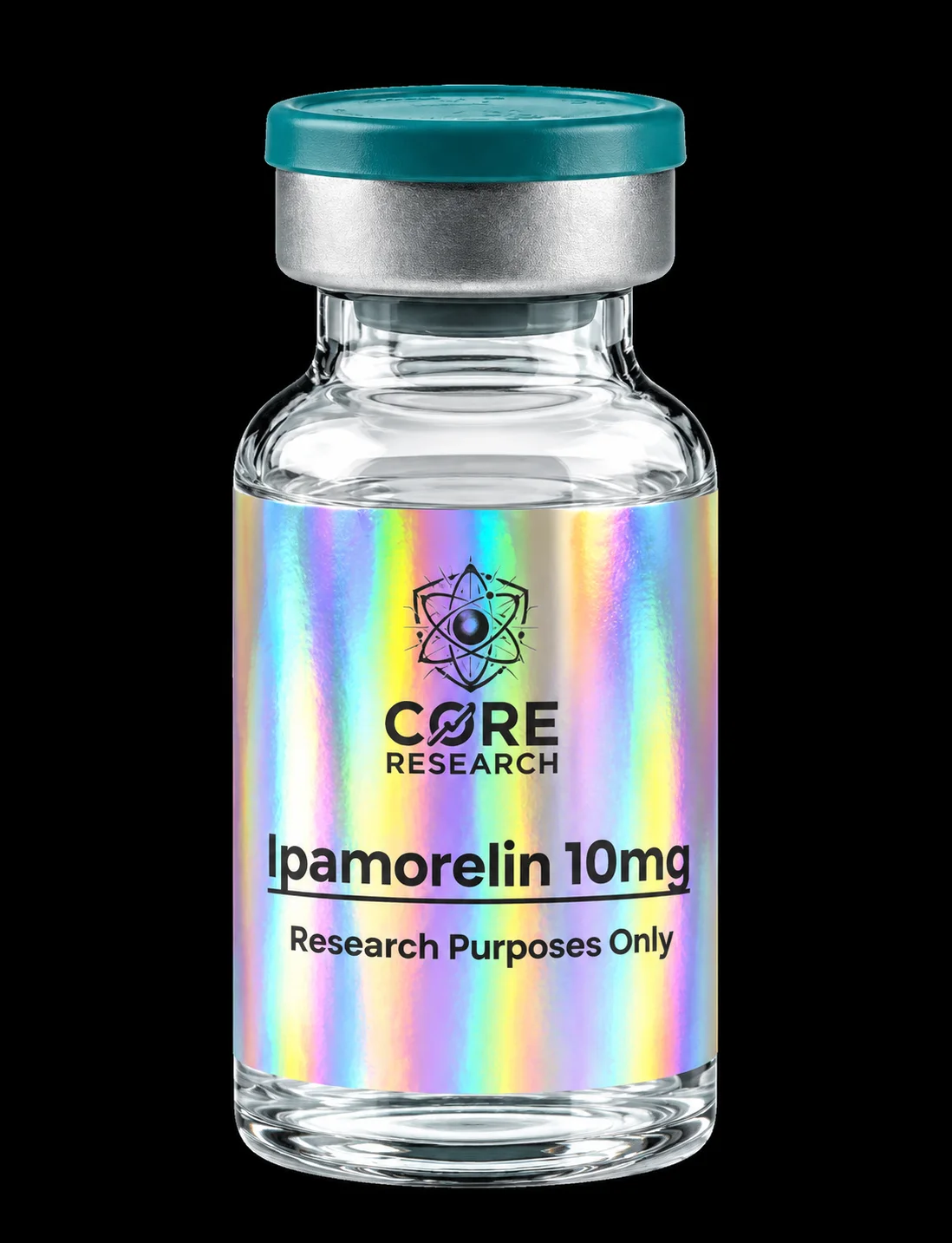
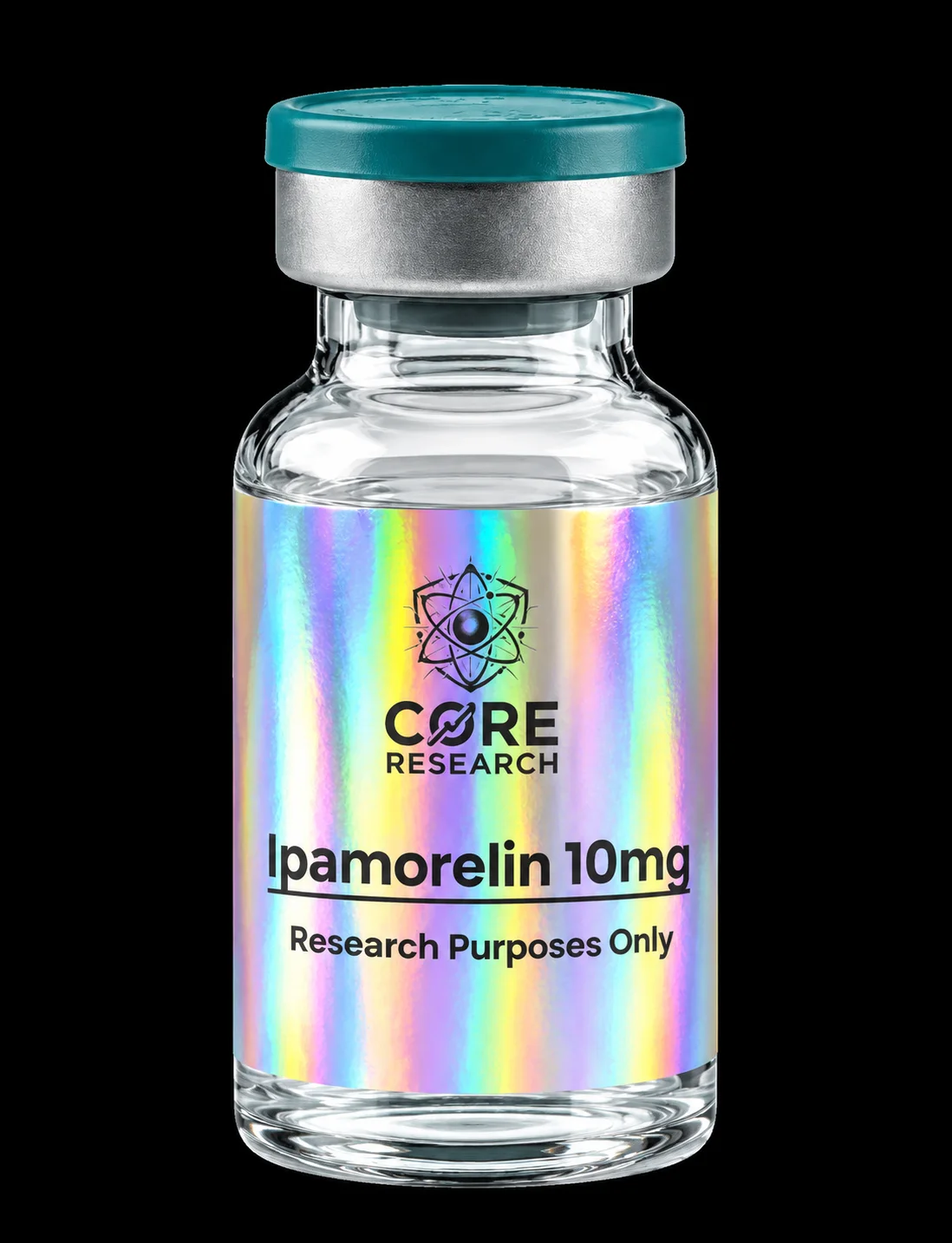
Ipamorelin 10mg is a single-material lyophilised research-peptide vial labelled with a nominal 10mg quantity. Ipamorelin is a synthetic pentapeptide investigated as a growth-hormone secretagogue—a compound that can stimulate growth-hormone release in specific experimental systems. Its receptor class differs from the GHRH-receptor analogues marketed under CJC-1295/modified-GRF names. Both may be studied in growth-hormone signalling, but they are not identical compounds or receptor inputs. 1
For in-vitro laboratory research only, not human or veterinary use. Current price, stock and ordering controls are in the live purchase panel. To check the product-specific chemical form, request batch documentation.
What is in the 10mg Ipamorelin listing?
| Attribute | This product record |
|---|---|
| Product | Ipamorelin 10mg |
| Nominal quantity | 10mg per vial |
| Format | Lyophilised material in a sealed vial |
| Peptide class | Synthetic pentapeptide (five residues) |
| Research sequence example | Aib–His–D-2-Nal–D-Phe–Lys–NH₂, as characterised in the original pharmacology paper 1 |
| Research pathway | Growth-hormone-secretagogue/ghrelin-receptor system |
| Supplied salt/counter-ion, quantitative assay and purity | Must match the actual material specification/lot report |
| Price and stock | Native WooCommerce values |
The literature notation is important: Aib and D-2-Nal are non-standard residues, D-Phe identifies stereochemistry, and –NH₂ specifies a terminal amide. A sequence printed in a research article is a reference identity, not an independent assay of this Core Research vial. Where exact molecular formula or mass matters, the value must correspond to the same terminal form and counter-ion identified by the supplier’s documentation.
Which related product is different?
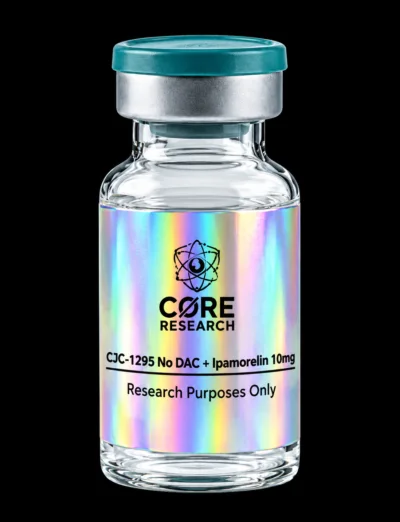
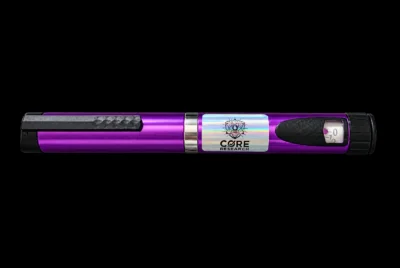
The CJC-1295 No DAC + Ipamorelin 10mg blend vial is a two-component item. The separately listed CJC-1295 / Ipamorelin Refill 10mg and complete combination pen differ in presentation, and their combined nominal quantity must be checked against the component breakdown. This Ipamorelin 10mg vial does not list CJC-1295 as a constituent. The single-versus-blend explanation clarifies why combination claims need separate evidence.
Ipamorelin and the GH-secretagogue receptor system
Ipamorelin belongs to a peptide family investigated through the growth-hormone secretagogue receptor (often identified as the ghrelin receptor, GHS-R1a). GHRH analogues act at the GHRH receptor, a different input to pituitary GH secretion. The shared hormonal endpoint makes the systems biologically related but does not demonstrate equal potency, identical downstream effects or predictable additive behaviour from mixing the compounds.
Original rat and pig pharmacology: what “selective” meant
Raun and colleagues (1998) examined ipamorelin in isolated rat pituitary cells and rat/pig pharmacology models, comparing it with other GH secretagogues. In primary rat pituitary cells, it produced a GH response in the range of the comparator GHRP-6. Antagonist experiments supported a GHRP-like rather than GHRH-receptor mechanism. In pigs, the investigators assessed GH and several other pituitary/hormonal endpoints. Ipamorelin did not show the ACTH and cortisol elevations observed with GHRP-2 and GHRP-6 in that particular comparison. 1
That is the appropriate interpretation of the word selective: the researchers measured a specific hormone pattern under defined conditions. It is not a claim of absolutely no effect on cortisol under any condition, absence of adverse effects in people or a clinical benefit from a marketed research product.
A human pharmacology study measured concentration and response
Gobburu and colleagues (1999) investigated ipamorelin’s pharmacokinetics (PK) and pharmacodynamics (PD) in healthy male volunteers. PK describes how measured drug concentration changes over time; PD describes an observed biological response. Their concentration–GH relationship was modelled with an episode of GH release and appreciable between-person variability in the response parameters. 2
The paper provides human pharmacology for the studied ipamorelin preparation and research conditions. It does not establish that this commercial vial has an identical formulation, purity, exposure profile or clinical performance. A labelled 10mg quantity does not specify a concentration-time curve or the amount of GH response an unrelated experiment will measure.
Clinical outcome evidence includes a negative comparison
A 2014 multicentre, randomised, double-blind, placebo-controlled phase 2 study investigated ipamorelin in 117 surgical patients with postoperative ileus; 114 were included in the reported safety/modified intent-to-treat populations. The key endpoint was time to tolerating a standard solid meal. The trial reported no statistically significant benefit for ipamorelin over placebo on its key and secondary efficacy analyses; the primary comparison had p = 0.15. 3
That finding does not negate its receptor activity in animals or healthy-volunteer PK/PD studies. It demonstrates that a measurable secretagogue mechanism does not automatically translate into improvement on a separate clinical endpoint. The study is not an assessment of this 10mg laboratory vial or a personal-use recommendation.
How to compare the evidence
| Evidence type | What was measured | What the finding does not settle |
|---|---|---|
| Rat pituitary and pig models [1] | GH release, antagonist profiles and selected hormone responses | Human safety or universal hormone selectivity |
| Healthy-volunteer PK/PD [2] | Ipamorelin concentrations and GH-response models | Clinical efficacy of a research-vial batch |
| Randomised postoperative-ileus study [3] | Patient functional endpoint compared with placebo | Every other possible research endpoint or this product’s quality |
| Combined CJC + Ipamorelin catalogue items | Declared two-constituent composition and format | Additivity, synergy or finished-product validation |
For a broader context on receptor classes, use the Ipamorelin versus GHRP-2 comparison and growth-signalling research comparison. They provide background but do not replace the exact-vial identity and lot record.
Checking the supplied material
If the laboratory needs a particular peptide terminal form, sequence or content basis, request the applicable batch record for “Ipamorelin 10mg, lyophilised vial”. Check that the specified form and expected molecular mass match the reported identity method. Chromatographic purity, actual component content and molecular identity are different analyses; a high-looking HPLC area percentage alone does not measure the nominal mass in a vial.
The CoA-reading guide, HPLC guide and mass-spectrometry reference explain these fields. No current-lot purity, sterility, endotoxin limit or stability result is asserted without the underlying applicable document.
Storage, delivery and receiving
Follow the actual container label and product-specific documented storage conditions. Unopened lyophilised material and a prepared research solution are different stability cases; solvent, container and laboratory exposure can matter. No universal post-preparation shelf life, biological activity guarantee or human administration protocol is supplied here. The storage-temperature guide provides additional laboratory considerations.
Core Research’s shipping policy describes dispatch from Birmingham, UK, plain outer packaging and tracking where provided. Processing and transit depend on the item and destination. The product’s price and availability remain dynamic in WooCommerce; shipping cost and the order total are determined by the applicable checkout conditions.
At receipt, confirm Ipamorelin 10mg, its nominal amount, vial closure and lot reference against the order and associated documentation. Record damage, unexpected warmth or discrepancies using the receiving checklist and contact Core Research promptly.
Ipamorelin product questions
Is Ipamorelin the same compound as CJC-1295 No DAC?
No. Their studied receptor systems are different. Ipamorelin is in the GHRP/ghrelin-secretagogue class; CJC-related modified GRF acts through GHRH-related signalling. A combined product needs its own component amounts and evidence.
Does “10mg” mean a measured dose or concentration?
No. It is the nominal vial quantity. A solution concentration requires a known volume and appropriate content basis. This page is not a dosing or administration guide.
Do human pharmacology studies prove that this vial is safe or effective?
No. They examined particular materials and research outcomes. The negative 2014 clinical comparison and the limits of the human PK/PD work are described above. An actual product needs its own identity and quality records.
Can I verify a lot or request bulk procurement?
Use Batch Documentation for the relevant report and Institutional Procurement for a quotation or purchase-order-reference enquiry. Do not assume same-lot availability unless it is confirmed for the order.
Research references
[1] Raun K et al. (1998). Ipamorelin, the first selective growth hormone secretagogue. European Journal of Endocrinology 139:552–561. PMID: 9849822.
[2] Gobburu JV et al. (1999). Pharmacokinetic-pharmacodynamic modeling of ipamorelin in human volunteers. Pharmaceutical Research. PMID: 10496658.
[3] Beck DE et al. (2014). Randomized controlled phase 2 study of ipamorelin for postoperative ileus. International Journal of Colorectal Disease 29:1527–1534. PMID: 25331030.