Description
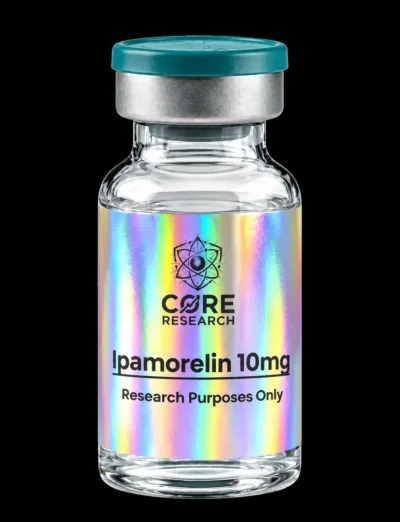
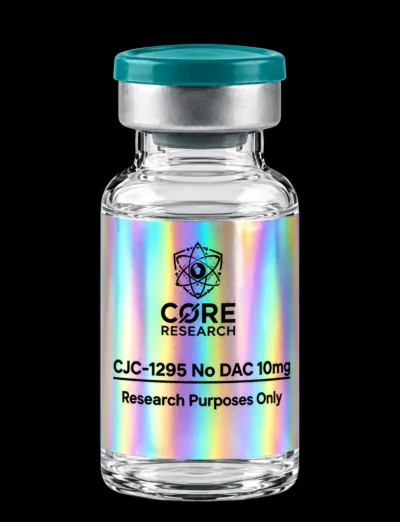
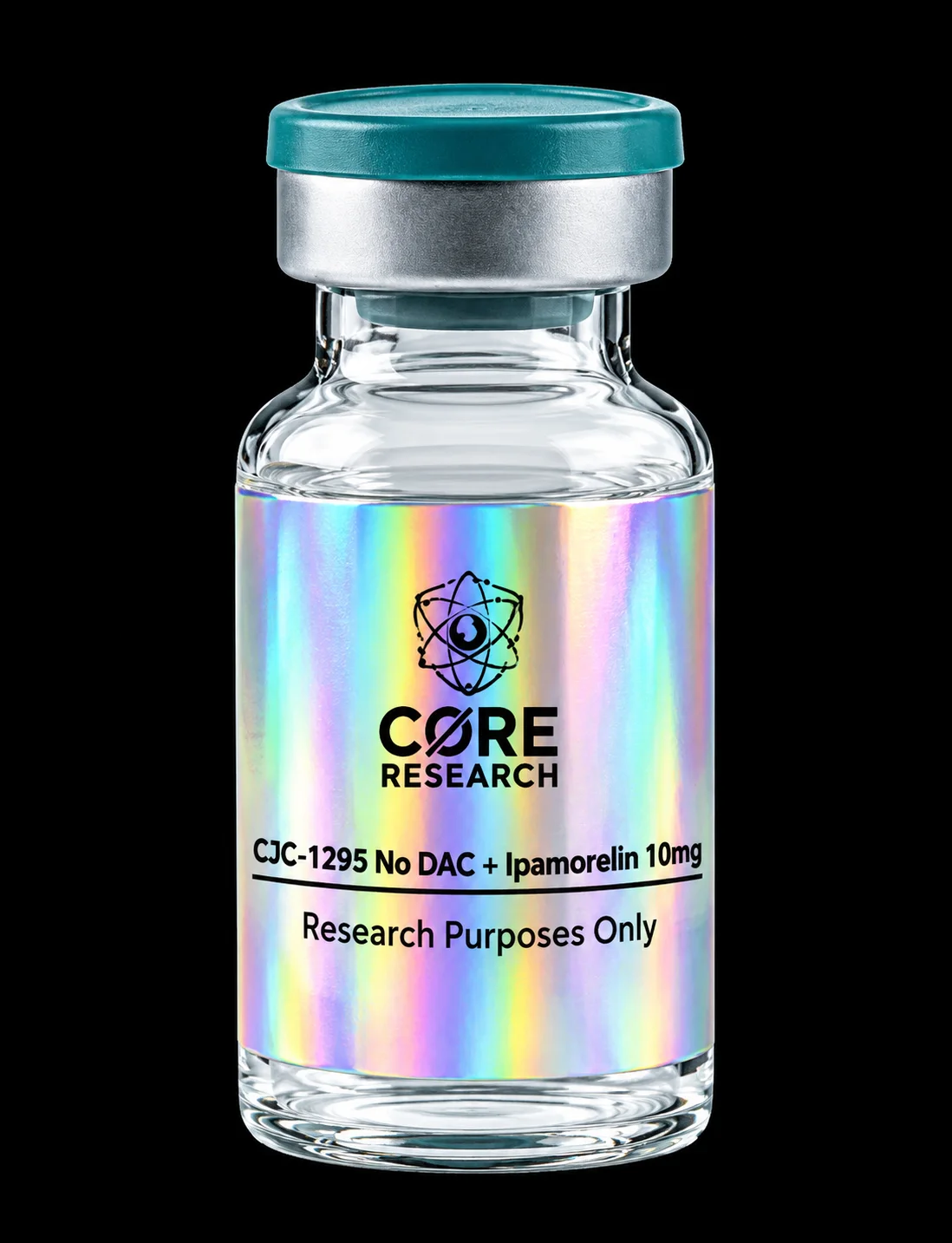
CJC-1295 No DAC + Ipamorelin 10mg is the Core Research listing for 10mg combined in a lyophilised vial. 5mg CJC-1295 No DAC plus 5mg Ipamorelin. It is supplied for in-vitro laboratory research only, not for human or veterinary use. The exact supplied chemical form, current batch results and any finished-format specifications must be checked against the documentation applicable to this item.
What you receive and what the label means
The current catalogue identifies this product as CJC-1295 No DAC + Ipamorelin 10mg. This page distinguishes the material name and labelled quantity from independently measured content. Stock and current price are supplied by the live WooCommerce purchase panel rather than duplicated as static claims in the description.
The stated nominal amount is not a prepared solution concentration, analytical purity percentage or guarantee of the number of experiments possible. Those further properties depend on the exact material form, documentation and laboratory method.
| Item | Detail |
|---|---|
| Catalogue product | CJC-1295 No DAC + Ipamorelin 10mg |
| Labelled amount | 10mg combined |
| Named material / declared composition | 5mg CJC-1295 No DAC plus 5mg Ipamorelin |
| Physical presentation | a lyophilised vial |
| Supply boundary | Laboratory research only; no human or veterinary use |
Which product format is the right catalogue item?
The related listings below differ in presentation and, where stated, composition. Do not assume their packages, compatible hardware, storage conditions or analysed content are identical merely because the molecular name overlaps. vial and pen-format comparison.
| Product | Declared format / relevant distinction |
|---|---|
| CJC-1295 No DAC + Ipamorelin 10mg (this item) | Vial / co-lyophilised; declared 5mg + 5mg |
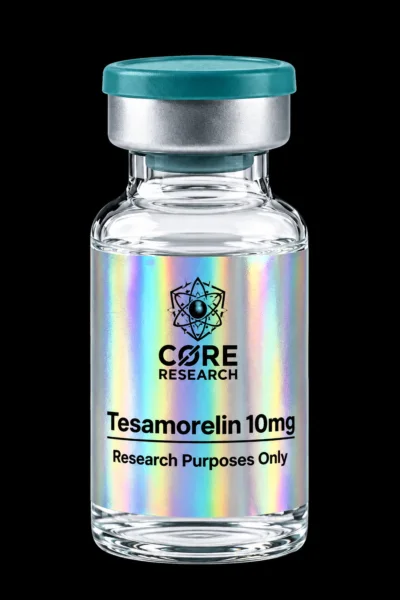
| CJC-1295 / Ipamorelin Refill 10mg | Refill; constituent split requires refill specification |
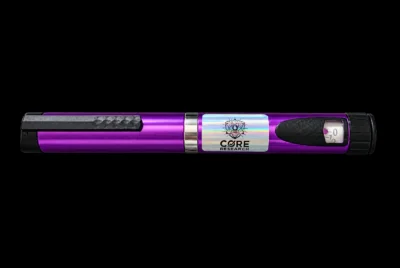
| CJC-1295 / Ipamorelin 10mg Pen | Complete preloaded pen; verify filled-format details |
What does 10mg mean for this CJC-1295/Ipamorelin blend?
This vial has a declared 5mg + 5mg composition. The 10mg refers to the two constituents combined, not 10mg of each. Both labelled constituents are co-lyophilised in this listing.
Research mechanisms and what studies actually found
The following sections distinguish the molecular identity, measured experimental endpoint and limitations of published work. Literature on a pure molecule, animal model or clinical formulation is not analytical evidence for this particular Core Research supply. The cited sources support the described scientific context, not a product-specific efficacy or batch claim.
Two signalling routes, not one compound
The listed combination places a growth-hormone-releasing-hormone analogue next to a growth-hormone secretagogue. The GHRH analogue is researched through the pituitary GHRH-receptor system and downstream cAMP signalling. Ipamorelin belongs to the GHRP/ghrelin-receptor class, with a distinct receptor-pharmacology history. These are complementary mechanistic hypotheses, but separate receptor classes are not proof of a synergistic response to this manufactured mixture. 1,5
Ipamorelin and the selectivity question
In early primary pituitary-cell and animal experiments, Raun and colleagues described the synthetic pentapeptide ipamorelin as a GH secretagogue with selectivity relative to other hormonal responses in their studied models. That selectivity is relative to the particular comparator, assay and observation period. It is not evidence that a finished research blend has no other biological effects or that every species responds identically. 1
Why No DAC is a critical identity distinction
The catalogue describes its CJC component as No DAC, a name commonly used for a Modified GRF(1–29)-type analogue. The long-acting CJC-1295 investigated in Teichman’s controlled pharmacology study used a Drug Affinity Complex enabling albumin interaction. The 2005 development work examined albumin conjugates. Those DAC-linked structures are not interchangeable with an unconjugated 1–29 analogue, and prolonged kinetic results measured for one should not be transferred to the other. 2,3
What human research does and does not show
Teichman and colleagues measured GH and IGF-I responses in healthy adults after exposure to DAC-linked CJC-1295. That is a pharmacodynamic observation for a specific molecule and research formulation, not a trial of this No-DAC/Ipamorelin combination. Separately, a randomised phase-2 study of ipamorelin for postoperative ileus did not establish the intended clinical benefit. Including this contrary result prevents a generic “growth hormone stimulation equals therapeutic efficacy” inference. 3,4
The blend as an experimental variable
The individual materials may be studied using different concentrations, matrices and endpoints. A co-lyophilised two-component item adds identity, relative content and interaction questions. The existence of two component literatures does not validate the combined material, prove chemical stability after preparation, or justify adding their reported results. Check both components and the actual finished format as separate analytical questions.
What evidence exists for this exact blend?
The constituent studies describe GHRH-analogue or ipamorelin research separately; the DAC-linked CJC studies do not test No DAC. No verified controlled clinical study of this exact co-lyophilised catalogue mixture, refill formulation or manufacturing lot was established in the available records. This is a limitation of the evidence inspected, not a claim that no study can ever exist.
Batch documentation and evidence before purchase
For a pre-purchase question, use Request batch documentation or email info@core-research.net, naming CJC-1295 No DAC + Ipamorelin 10mg and its vial format. You do not need a previous container lot number to enquire. Ask which dispatch lot and exact presentation any proposed report covers.
Read the certificate for sample identification, test method, analyte(s), units, measured content, chromatographic results and issuer. Identity, chromatographic purity and quantitative content answer different questions; one HPLC peak-area value alone does not prove the labelled mass. Laboratory handling and evidence requirements depend on the actual chemical form.
For context see how to read a peptide CoA, HPLC and purity testing and mass-spectrometry identity testing. These guides explain how documents are read; they do not assert that a current lot passed any unobserved test.
Storage, receipt and handling
Follow the storage instructions supplied for this particular product and lot. A fixed dry-material temperature or shelf life is not stated here without authenticated product-specific evidence. Solution stability, if applicable, is a separate question that can depend on solvent, pH, concentration, container and exposure history.
At receipt, inspect the material label, lot and quantity, packaging and closure against the order; record discrepancies before laboratory use. See the research-product receiving checklist and laboratory storage guidance. For late or unexpectedly warm delivery, consult warm or delayed research shipments.
Ordering and laboratory procurement questions
Can I ask for the lot documentation before ordering?
Yes. The Request batch documentation route accepts product/presentation enquiries before an order. Ask whether the available report covers the lot expected to be supplied; availability and analytical scope must not be assumed.
Where do orders ship from?
Core Research’s published shipping policy describes dispatch from Birmingham, UK, in plain outer packaging. Available carrier options, shipping charges and tracking depend on the actual order and service. The checkout and shipping policy provide the applicable current information.
Does the labelled amount determine experimental concentration?
No. The labelled mass alone does not determine a prepared concentration, method, recovery, sample number or material content verified by assay. Those require defined volume and material-specific laboratory controls; the page provides no personal-use or administration directions.
Can an institution ask for a quotation?
Yes. The Institutional Procurement page provides a quotation and purchase-order-reference enquiry pathway. State the requested item, quantity, delivery details and any need for a particular lot or document before ordering.
What if the item arrives damaged or differs from the order?
Contact info@core-research.net with the order number, labelled product/lot identifiers and photographs. Keep the packaging and segregate the item from laboratory use until the discrepancy is addressed.
Order or enquire about CJC-1295 No DAC + Ipamorelin 10mg
Use the native purchase panel for current pricing, stock and quantity selection. For an analytical or format question, contact Core Research before purchase; for shipping information see Shipping & Delivery.
The research discussed above is not a human-use instruction or a claim about medical effects of the supplied item. Read the Research Use Only policy and testing and quality methodology for the published supply and quality framework.
Selected research and identity references
[1] Raun K et al. (1998), Ipamorelin: selective GH secretagogue pharmacology. European Journal of Endocrinology. Source.
[2] Jetté L et al. (2005), GHRH analogue–albumin conjugates and their receptor activity. Endocrinology. Source.
[3] Teichman SL et al. (2006), Controlled pharmacology of DAC-linked CJC-1295 in healthy adults. Journal of Clinical Endocrinology & Metabolism. Source.
[4] Beck DE et al. (2014), Randomised ipamorelin postoperative-ileus study. International Journal of Colorectal Disease. Source.
[5] Lance VA et al. (1984), GHRH(1–29) analogue structure–activity research. Source.