Description
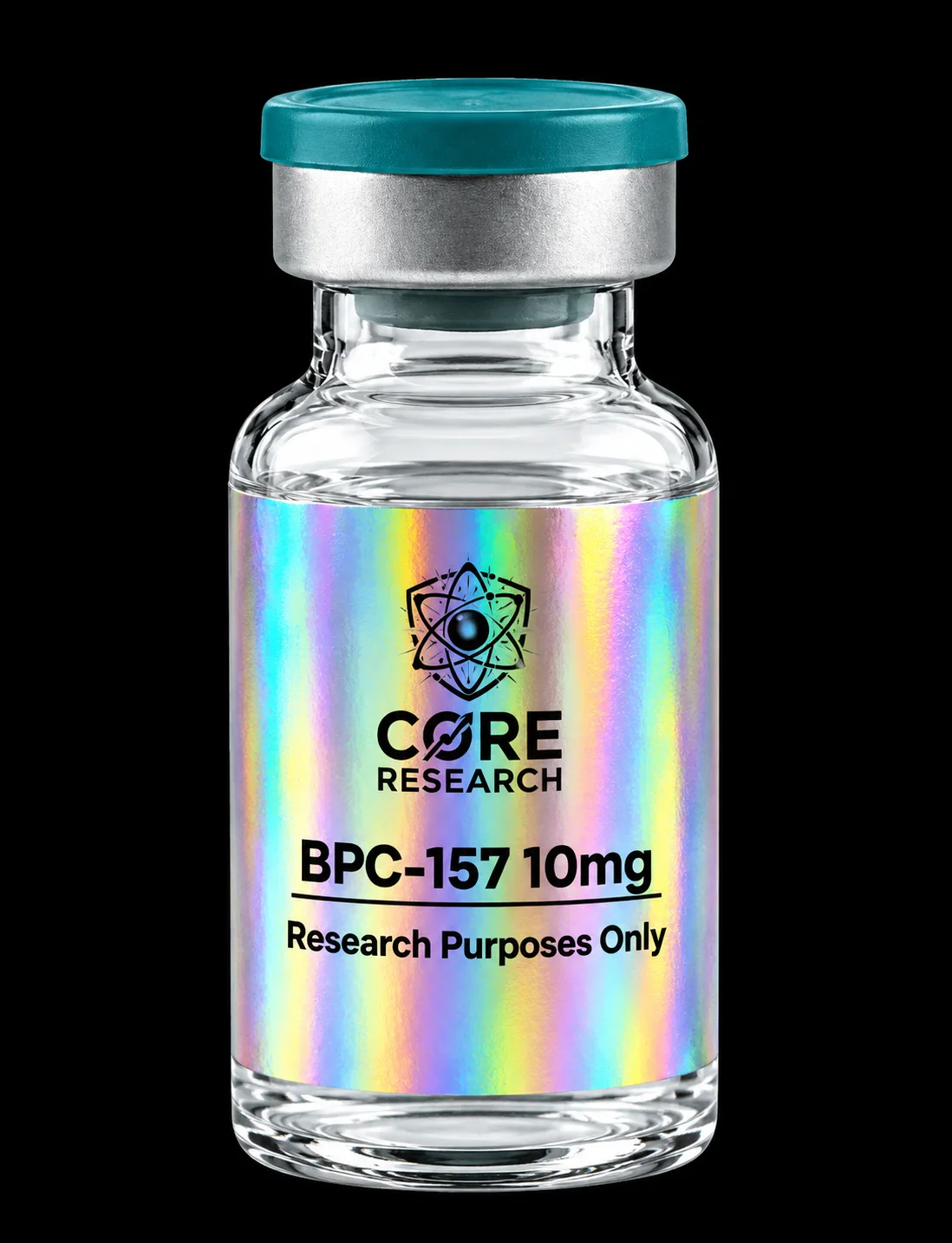
BPC-157 (Body Protection Compound-157) — Research Grade, 10 mg Lyophilised Vial
BPC-157 is a synthetic pentadecapeptide (15 amino acids) derived from a partial sequence of human gastric juice protein BPC. Each 10 mg vial supplied by Core Research contains lyophilised BPC-157 acetate salt, manufactured to research-grade standards and verified by HPLC and mass spectrometry prior to dispatch.
Analytical Specification
| Parameter | Specification |
|---|---|
| Sequence (single-letter) | GEPPPGKPADDAGLV |
| Molecular Formula | C62H98N16O22 |
| Molecular Weight | 1,419.55 Da |
| CAS Number | 137525-51-0 |
| Salt Form | Acetate |
| Physical Form | White to off-white lyophilised powder |
| Purity (HPLC) | ≥99.0% |
| Identity Confirmation | ESI-MS (electrospray ionisation mass spectrometry) |
| Vial Fill | 10 mg per vial |
| Sterility | Non-sterile research reagent |
Storage and Transport Conditions
| Condition | Specification |
|---|---|
| Lyophilised (sealed vial) | −20 °C, protected from light and moisture |
| Reconstituted solution | 2–8 °C; use within 28 days; avoid repeated freeze-thaw cycles |
| Transit | Dispatched with cold-chain packaging; ambient transit does not compromise lyophilised integrity for standard UK delivery windows |
| Solubility | Freely soluble in sterile water or bacteriostatic water for injection (research grade); soluble in dilute acetic acid (0.1–1%) |
Batch Documentation and Quality Assurance
Every batch of BPC-157 10mg supplied by Core Research is accompanied by a Certificate of Analysis (CoA) confirming HPLC purity ≥99.0% and ESI-MS identity. Batch-specific CoA documents are available through the Core Research CoA Portal. Our quality framework and analytical methodology are described in full on the HPLC Purity & Peptide Testing page. Researchers requiring additional analytical data — including TFA content, endotoxin testing, or residual solvent profiles — should contact the laboratory team directly.
Reconstitution and Handling
BPC-157 lyophilised powder reconstitutes readily in sterile water or bacteriostatic water for injection (research grade). The peptide is freely soluble at standard laboratory working concentrations. Researchers should note that the lyophilised form is considerably more stable than the reconstituted solution; once reconstituted, the working solution should be stored at 2–8 °C and used within 28 days. A full reconstitution protocol — including solvent selection rationale, aliquoting strategy, and concentration calculations — is available in the BPC-157 Reconstitution & Solvent Stability Guide. Compatible laboratory consumables, including bacteriostatic water and sterile vials, are available in the Accessories category.
Analytical Note — Core Research Quality Team
In routine incoming QC, we observe that BPC-157 lyophilisates from different synthesis batches can vary in reconstitution behaviour — specifically, the time to full dissolution at room temperature. This is typically a function of residual moisture content in the lyophilised cake rather than peptide purity. Batches with a denser, more compressed lyophilised cake may require gentle vortexing for 30–60 seconds to achieve complete dissolution. We do not recommend sonication, as this can introduce mechanical stress to the peptide backbone. If turbidity persists after vortexing, warming the solution briefly to 25–30 °C whilst continuing to mix will resolve it in the majority of cases. All batches are HPLC-verified at ≥99.0% purity before dispatch; reconstitution behaviour does not affect analytical specification.
Regulatory and Compliance Status
It is not licensed by the MHRA, FDA, or EMA for human or veterinary use. The World Anti-Doping Agency (WADA) temporarily listed BPC-157 as a prohibited substance in 2022 under Class S0 (Unapproved Substances); it was subsequently removed from the WADA Prohibited List, though researchers affiliated with sporting organisations should verify the current status with their relevant body. It is not intended for diagnostic, therapeutic, or prophylactic use in humans or animals.
Frequently Asked Questions
What purity standard does Core Research apply to BPC-157?
Each batch is tested by reverse-phase HPLC and must achieve ≥99.0% purity before release. Identity is confirmed by ESI-MS. Batch-specific CoA documents are available through the CoA Portal.
What is the recommended storage condition for the lyophilised vial?
Sealed lyophilised vials should be stored at −20 °C, protected from light and moisture. Under these conditions, the lyophilised powder is stable. Once reconstituted, the working solution should be held at 2–8 °C and used within 28 days. Repeated freeze-thaw cycles of the reconstituted solution should be avoided.
Is BPC-157 soluble in water?
Yes. BPC-157 is freely soluble in sterile water and bacteriostatic water at standard research working concentrations. It is also soluble in dilute acetic acid (0.1–1% v/v) if required. Full reconstitution guidance is available in the BPC-157 Reconstitution Guide.
What is the molecular weight of BPC-157?
The molecular weight of BPC-157 (free base, acetate salt) is 1,419.55 Da. The molecular formula is C62H98N16O22 and the CAS number is 137525-51-0.
Is a Certificate of Analysis available for each batch?
Yes. Batch-specific CoA documents — including HPLC chromatograms and MS data — are available through the Core Research CoA Portal. The CoA is also included with each order.
Researchers intending to use it in cell-based assays should apply appropriate sterile filtration (0.22 µm) to the reconstituted solution prior to use. It is the researcher’s responsibility to validate the suitability of the reagent for their specific assay conditions.
Research context
The published literature on this material is summarised in the laboratory guides linked below. This record describes the material as supplied: identity, format, analytics, storage and documentation. It does not describe effects, and none should be inferred from the catalogue category.
Research Use Only — Not for Human or Veterinary Use
BPC-157 10mg is supplied exclusively for in vitro research and pre-clinical laboratory investigation. It is not approved for therapeutic use in humans or animals by the MHRA, FDA, or any other regulatory authority. Purchase confirms the buyer is a qualified researcher operating within an institutional or commercial laboratory setting.